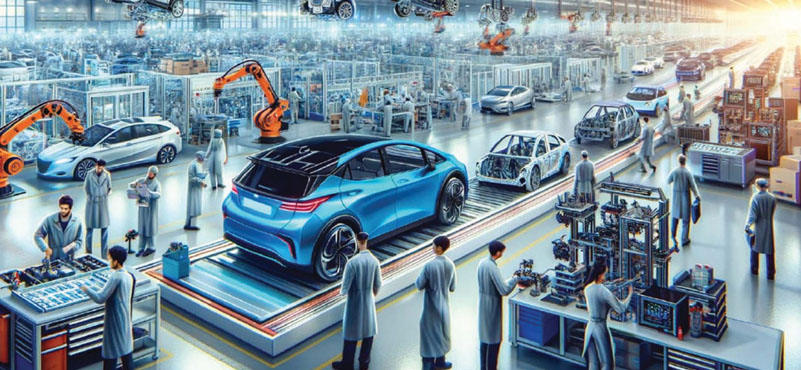
The Evolution of the Automobile: A Glimpse into the Past, Present, and Future
The automobile is a marvel of engineering that has drastically reshaped the landscape of human civilization. From the first motorcar that crawled along dirt roads to the sleek, autonomous vehicles of today, the evolution of the automobile reflects broader technological, cultural, and societal changes. Over the years, the car has not only transformed transportation but has also become a symbol of freedom, innovation, and even social status. In this article, we will explore the journey of the automobile, examining its historical development, current state, and the exciting future that lies ahead.
The Birth of the Automobile
The origins of the automobile can be traced back to the late 19th century, when inventors sought to replace the horse-drawn carriage with a more efficient means of transportation. Karl Benz, a German engineer, is widely credited with creating the first true automobile in 1885. His vehicle, the Benz Patent-Motorwagen, was powered by a single-cylinder engine and could reach a top speed of just 10 miles per hour. Despite its modest beginnings, the Motorwagen marked a crucial milestone in the history of the automobile.
Meanwhile, across the Atlantic, American inventor Henry Ford was developing his own vision of the automobile. In 1908, Ford introduced the Model T, a vehicle that would forever change the automotive landscape. Unlike Benz’s Motorwagen, the Model T was designed with mass production in mind. By introducing the assembly line, Ford was able to dramatically reduce the cost of manufacturing, making automobiles more affordable for the average person. This democratization of the automobile gave rise to a new era of mobility, empowering individuals to travel greater distances with ease.
The Rise of the Automobile Industry
As automobiles became more accessible, the demand for them surged. In the early 20th century, the United States became the epicenter of the automotive industry, with major companies like Ford, General Motors, and Chrysler leading the charge. The post-World War II era saw a boom in automobile production, as returning soldiers sought to purchase cars and build families in the growing suburbs. The automobile was no longer just a luxury; it had become a necessity for the modern American lifestyle.
During this period, the automobile began to evolve beyond a simple mode of transportation. Car manufacturers began to place more emphasis on design, comfort, and performance. The tailfins of the 1950s, the muscle cars of the 1960s, and the rise of luxury brands like Cadillac and Mercedes-Benz all contributed to the car’s status as an object of desire and prestige. The automobile had become more than just a tool; it was an extension of one’s personality and social identity.
The Automobile Today: A Blend of Innovation and Convenience
In the present day, the automobile industry is characterized by rapid technological advancements, environmental concerns, and an increasing focus on consumer experience. Modern cars are no longer just about getting from point A to point B; they are equipped with cutting-edge features that enhance safety, comfort, and entertainment. The introduction of electric vehicles (EVs) such as the Tesla Model S has redefined the way we think about car ownership. With zero emissions and advanced technology, EVs represent a significant shift towards sustainability in the automotive world.
Moreover, the rise of autonomous vehicles, or self-driving cars, promises to revolutionize how we interact with transportation. Companies like Waymo and Uber are already testing autonomous cars on public roads, with the hope of reducing traffic accidents and increasing efficiency. While fully autonomous vehicles are still a work in progress, the potential they hold is enormous. In the future, cars may be able to navigate complex roadways with little to no human intervention, fundamentally changing the way we commute and travel.
In addition to these technological advancements, the modern automobile is also more connected than ever before. With the advent of infotainment systems, GPS navigation, and smartphone integration, drivers are able to stay connected while on the road. Features like voice recognition, wireless charging, and advanced driver-assistance systems (ADAS) further enhance the driving experience, making it safer and more enjoyable.
However, the convenience of modern automobiles comes at a price. Despite the progress made in fuel efficiency and emissions reduction, traditional gasoline-powered vehicles remain a significant source of pollution. The automotive industry is under increasing pressure to develop more sustainable solutions, and many governments around the world are offering incentives for consumers to switch to electric vehicles. As the demand for cleaner, greener options grows, the industry is poised for yet another transformation.
The Future of the Automobile: Sustainability, Connectivity, and Beyond
Looking ahead, the future of the automobile seems to be increasingly intertwined with advancements in sustainability, connectivity, and artificial intelligence. As global concerns about climate change continue to mount, the push for greener alternatives to fossil fuels is gaining momentum. Electric vehicles (EVs) are likely to become even more mainstream in the coming years, as battery technology improves and charging infrastructure expands. In addition to electric propulsion, hydrogen fuel cells are also being explored as a viable alternative to traditional gasoline engines, offering another pathway toward reducing the environmental impact of transportation.
Another exciting area of development is the concept of the “smart car.” As the Internet of Things (IoT) continues to evolve, cars are becoming more integrated with the digital ecosystem. Vehicles will increasingly communicate with one another, traffic signals, and even pedestrians, paving the way for more efficient and safer roads. Smart infrastructure could allow for real-time updates on traffic conditions, accidents, and weather, while cars equipped with AI could adjust routes and driving behavior in response to these variables.
The emergence of autonomous driving technology also holds great promise for the future. In addition to reducing human error on the road, self-driving cars could lead to the development of new transportation models, such as ride-sharing fleets and autonomous delivery services. This shift could fundamentally alter our relationship with car ownership, as individuals may opt to rely on autonomous vehicles for their daily commute rather than purchasing a car of their own.
The idea of “mobility as a service” (MaaS) is gaining traction, especially in urban environments where owning a car can be costly and impractical. MaaS allows individuals to access a variety of transportation options—such as shared electric scooters, ride-hailing services, and autonomous vehicles—via a single, integrated platform. This shift toward shared mobility could help alleviate traffic congestion, reduce emissions, and make transportation more accessible for all.
Conclusion
The automobile has come a long way since its inception in the late 19th century. What began as a simple contraption for personal transportation has evolved into a complex and multifaceted industry that touches nearly every aspect of modern life. Today, the car is a symbol of innovation, freedom, and status, while also representing some of the challenges and opportunities that lie ahead. As we move into the future, the automobile will continue to evolve, with an emphasis on sustainability, connectivity, and autonomy. The next chapter in the story of the automobile promises to be just as transformative as the ones that came before it, paving the way for a new era of mobility that will shape the world for generations to come.